Matera is one of the most interesting sites in Italy, if you enjoy history. The town is literally 9000 years old, one of the oldest in the world. It is home to one of the earliest sites of human habitation in Italy, and is now protected as a UNESCO World Heritage Site. Because it’s a living town, there’s no admission free, and no waiting times. There’s a public parking garage about two blocks away from the site, and an official information booth where they give out maps is right on the corner by the garage.
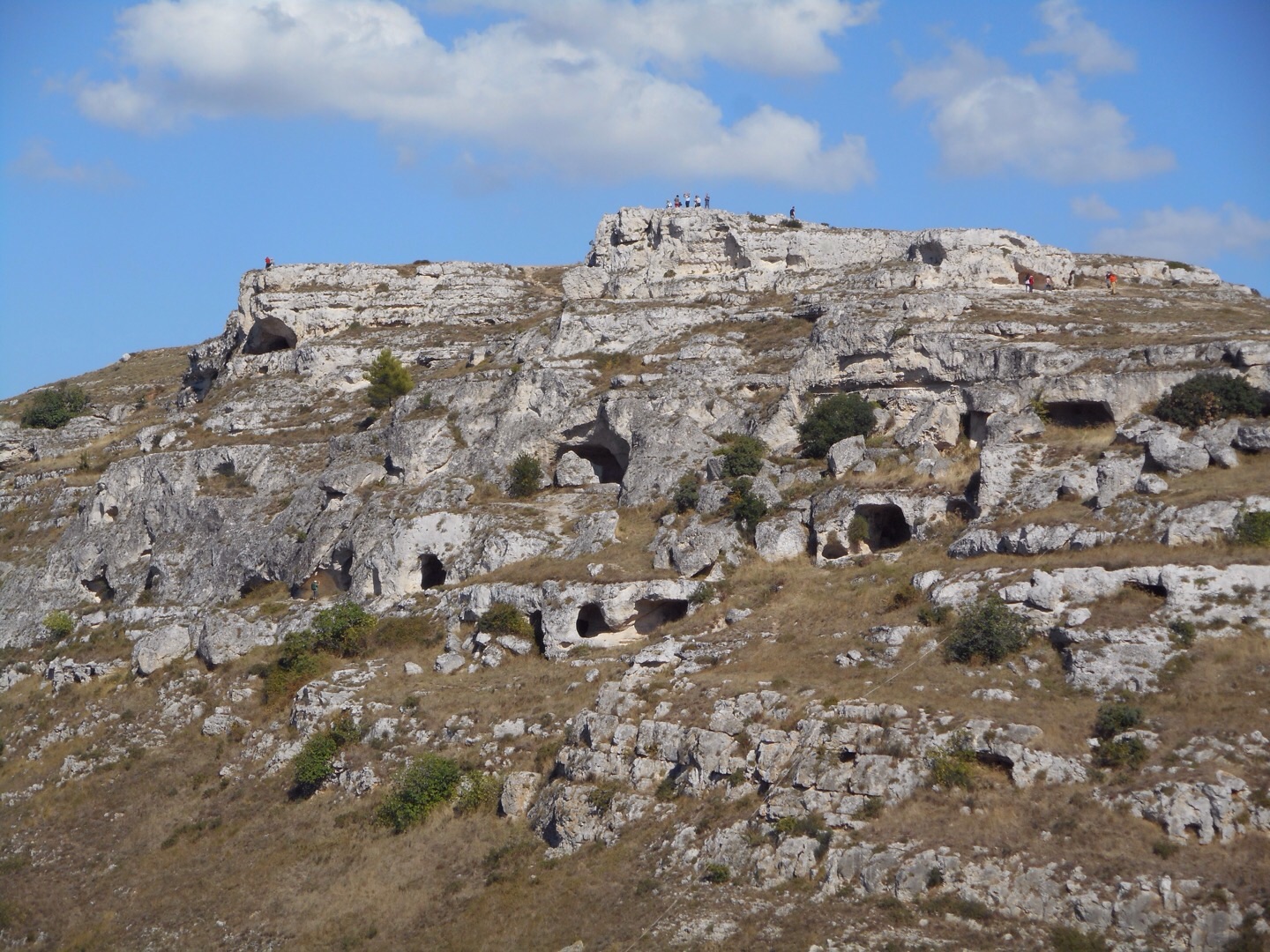
Across the valley, you can still see some of the caves, that were abandoned centuries ago. People started living in the caves, and just never left the area. They just kept improving their housing.

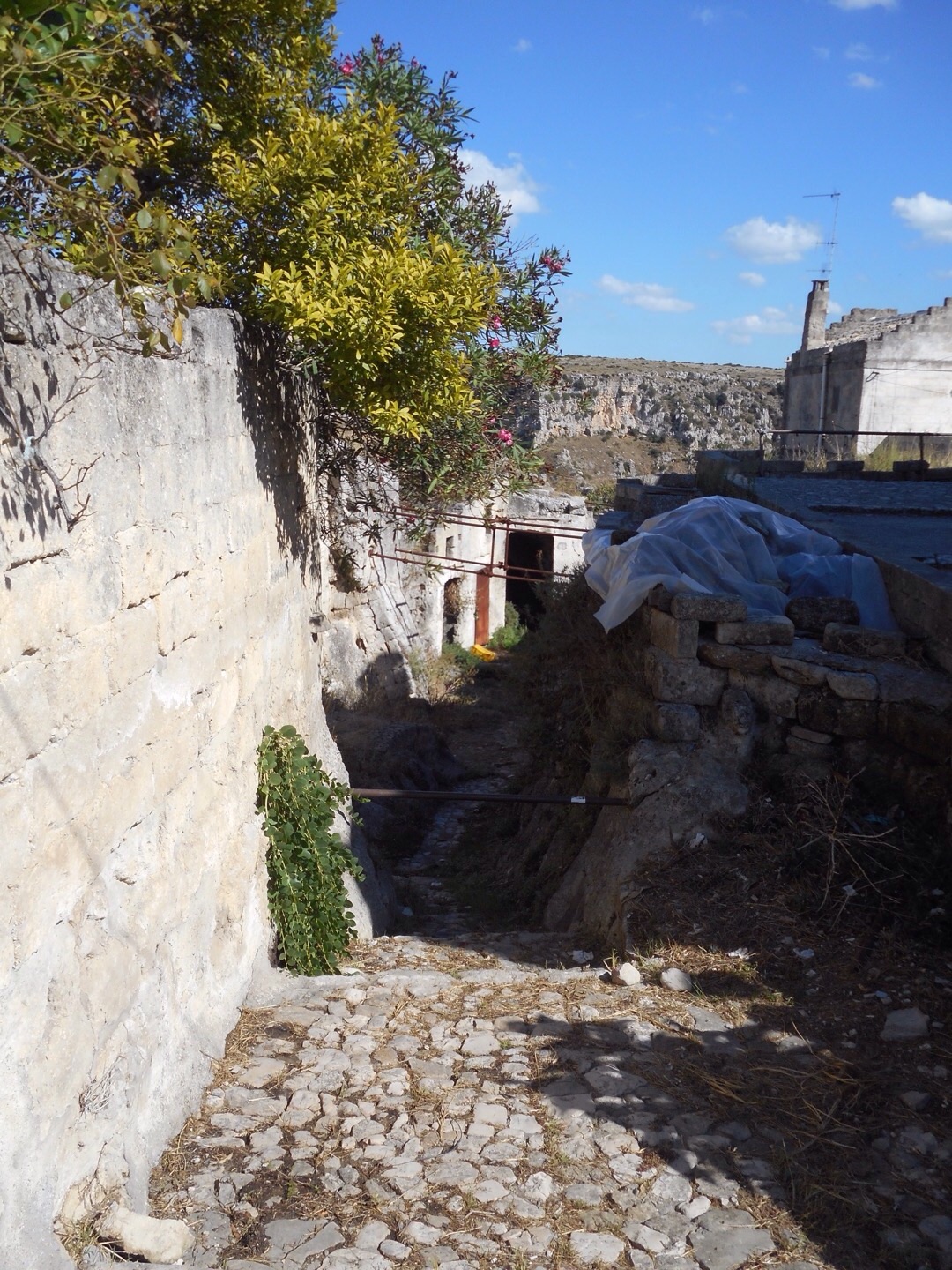
What’s even better about it, is that it is still inhabited. No thanks to the Italian Government, which tried to move out all the residents in 1952, embarassed by the poverty there, and the possibility that this was not the image they wanted of modern Italy. Luckily, a lot of people refused to move.


The settlement started with people living in caves, which they hollowed out and improved as the centuries passed. When they learned to work wood, they made doors; when they learned how to built cisterns under the floor, they built cisterns which held the rainwater for the families within. It may be the only place in the world where a person can boast of living in the same place as his forebears from 9000 years ago.
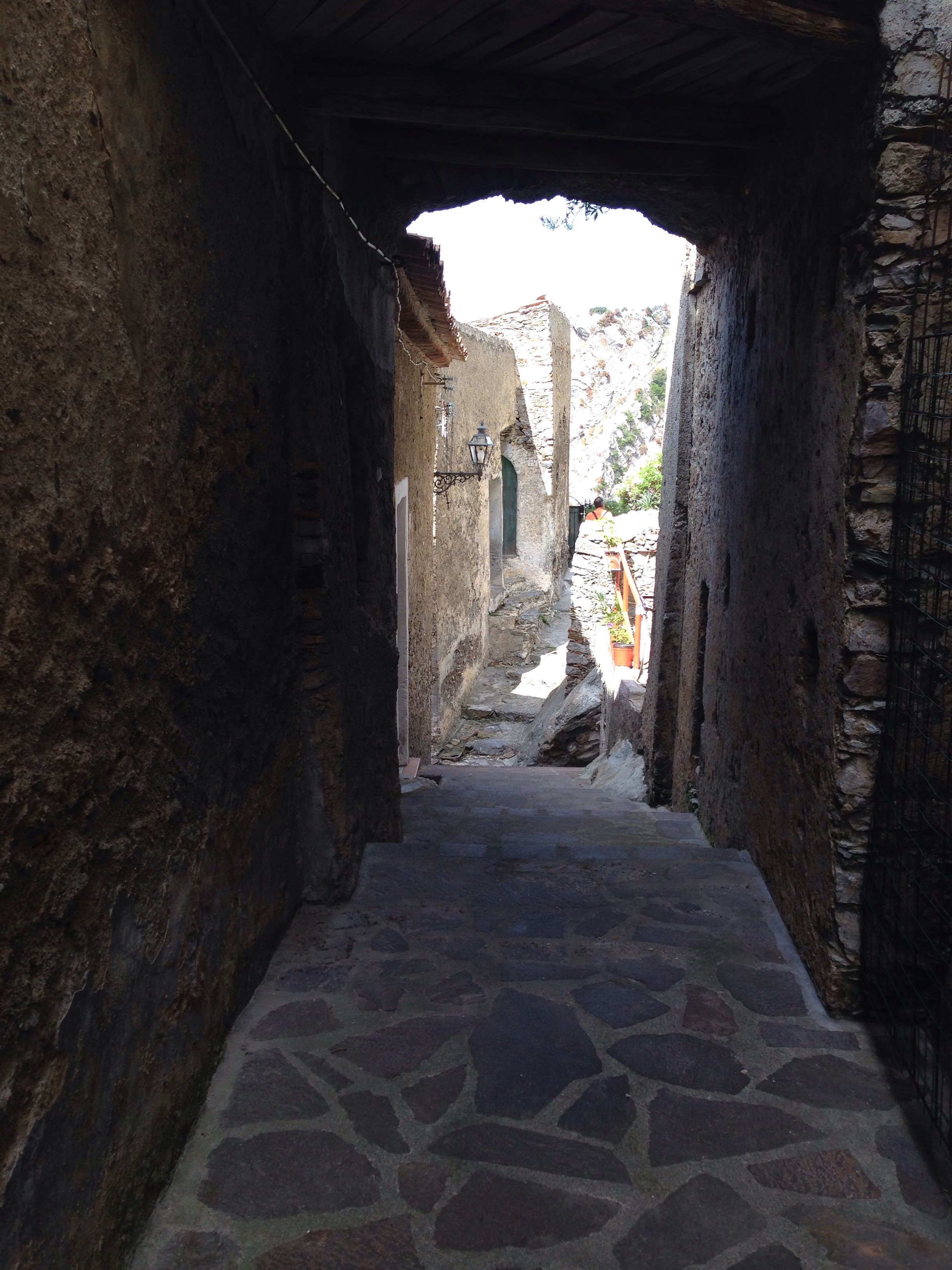
Some of the habitations look half like caves, and half like stone houses, with typical Italian red roofs, chimneys, and even TV aerials sprouting from the roofs. No satellite dishes that I saw. It’s clear that people make themselves comfortable with outside seating areas, modern doors and windows and build extensions onto their houses with the same stone.

One part of the “Sassi”, as it’s called is all residential, with a few small restaurants along the main road to cater to tourists. Another area, still built out of the caves, contains hotels and businesses.
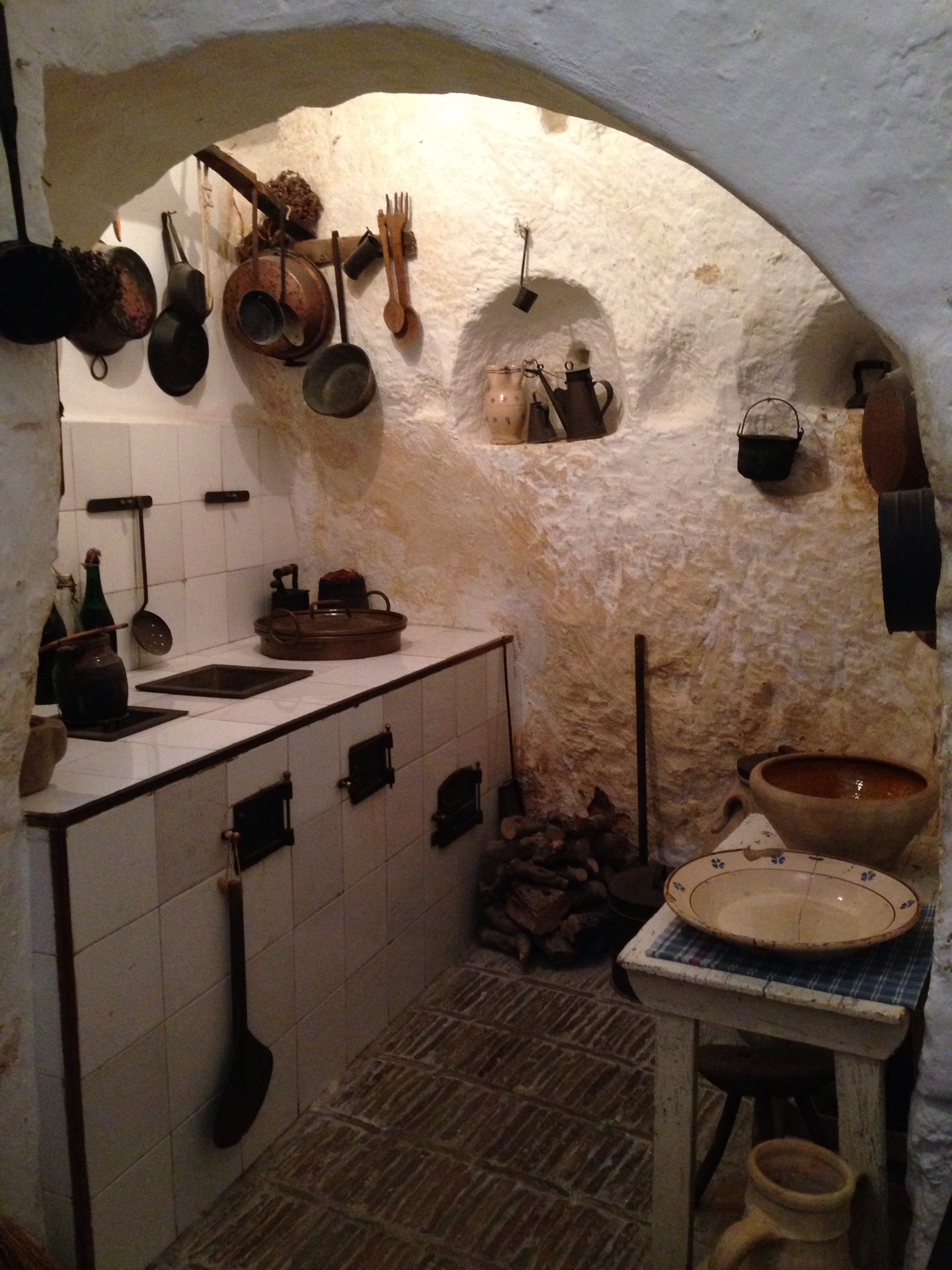
One of the caves, not lived in any more, has been outfitted with the household goods that were used here in the 19th and early 20th centuries. There would have been one large bed for the couple, and a few pieces of furniture, mostly with large drawers which would be used as beds for small children. A hen and her chicks would live under the raised bed, and there was a small stable area for a donkey or mule, and perhaps a goat.

Churches are also carved out of the rock, and contain frescoes which are still quite beautiful. In one church, I saw frescoes dating back to the 11th century. Photography was forbidden, and there was a small entrance fee to this and some other sites, to aid with preservation. These “Ruperian churches” can be found around the area, although we didn’t have time to discover exactly where, but I did see a sign as we left the town, advertising a church with a tour bus pulling into the driveway.
In another cave, the people had stored snow during the winter months for use in healing and relief from the heat in the summers. Clean snow was kept for the humans and the dirtier snow for animals.
It is a fascinating site, well worth a visit, and took us so far south that on our way back we saw the Gulf of Taranto in the distance, the body of water between the toe and the heel of the boot of Italy.
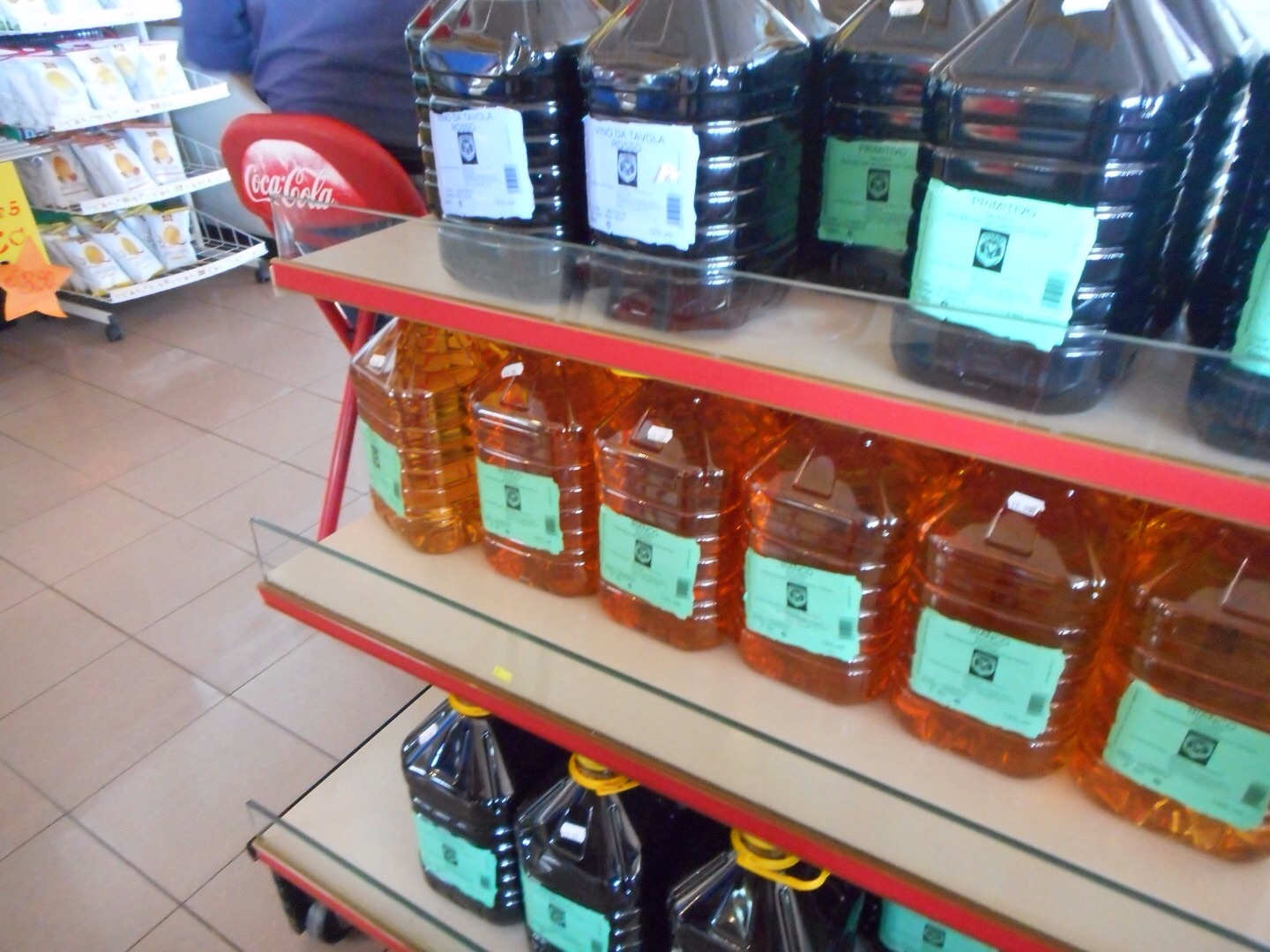
On the way home, I decided to stop for gas, and we found a gas station-coffee shop-snack bar-gambling parlor and bar – all rolled up into one. A few men were off to the side, betting at the machines. Two men were drinking beer, a couple of women had expresso at the bar. We and another couple were having sandwiches. Right beside us was a shelf selling 5 liters of wine for about $10. I noted that one of the wines was labeled “rough”. Obviously where the locals come.






















 amsolomon18