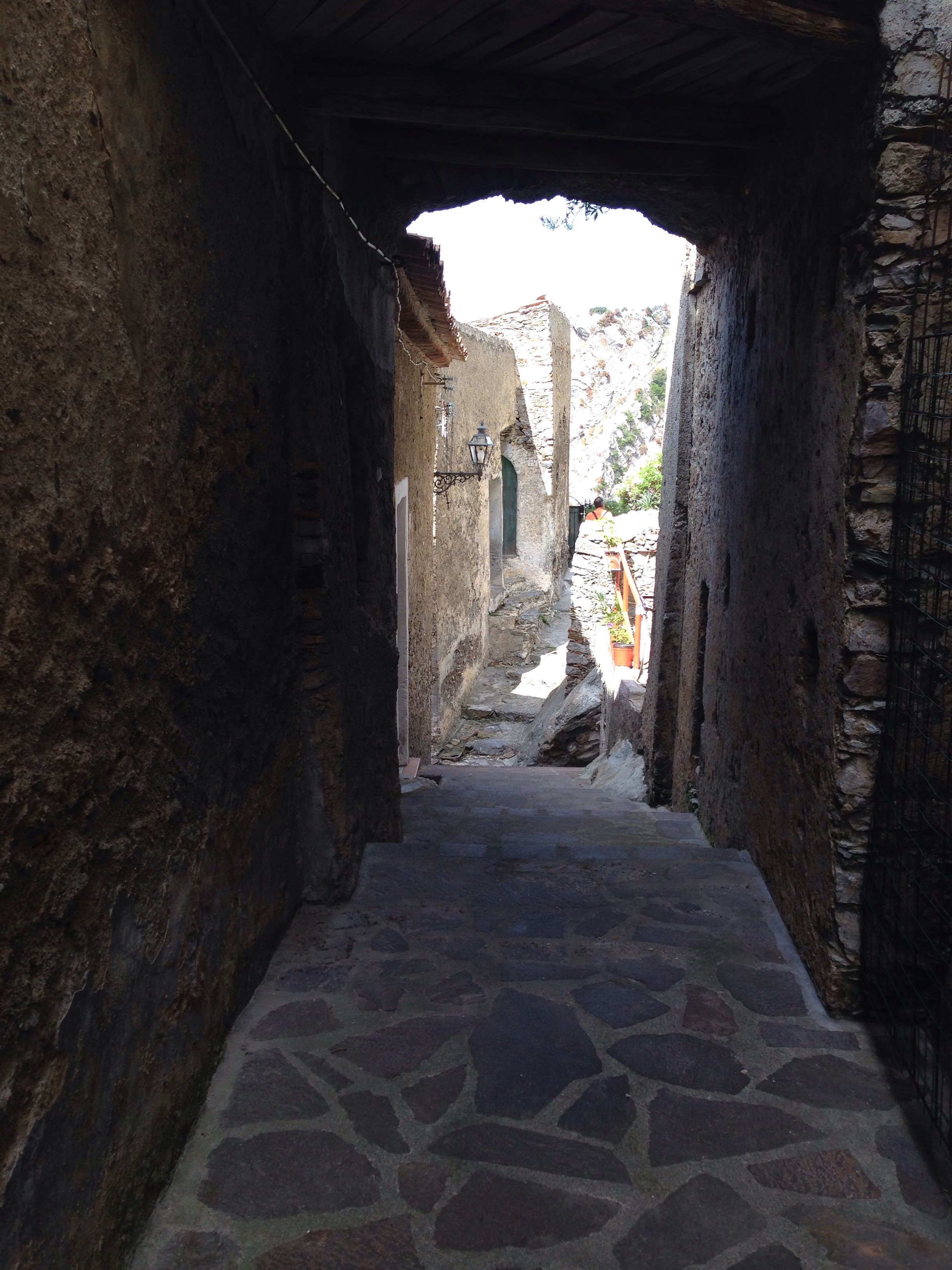
Day 17: UNESCO site Matera, the cave-dwellers

Matera is one of the most interesting sites in Italy, if you enjoy history.  The town is literally 9000 years old, one of the oldest in the world.  It is home to one of the earliest sites of human habitation in Italy, and is now protected as a UNESCO World Heritage Site.  Because it’s a living town, there’s no admission free, and no waiting times. There’s a public parking garage about two blocks away from the site, and an official information booth where they give out maps is right on the corner by the garage.
image

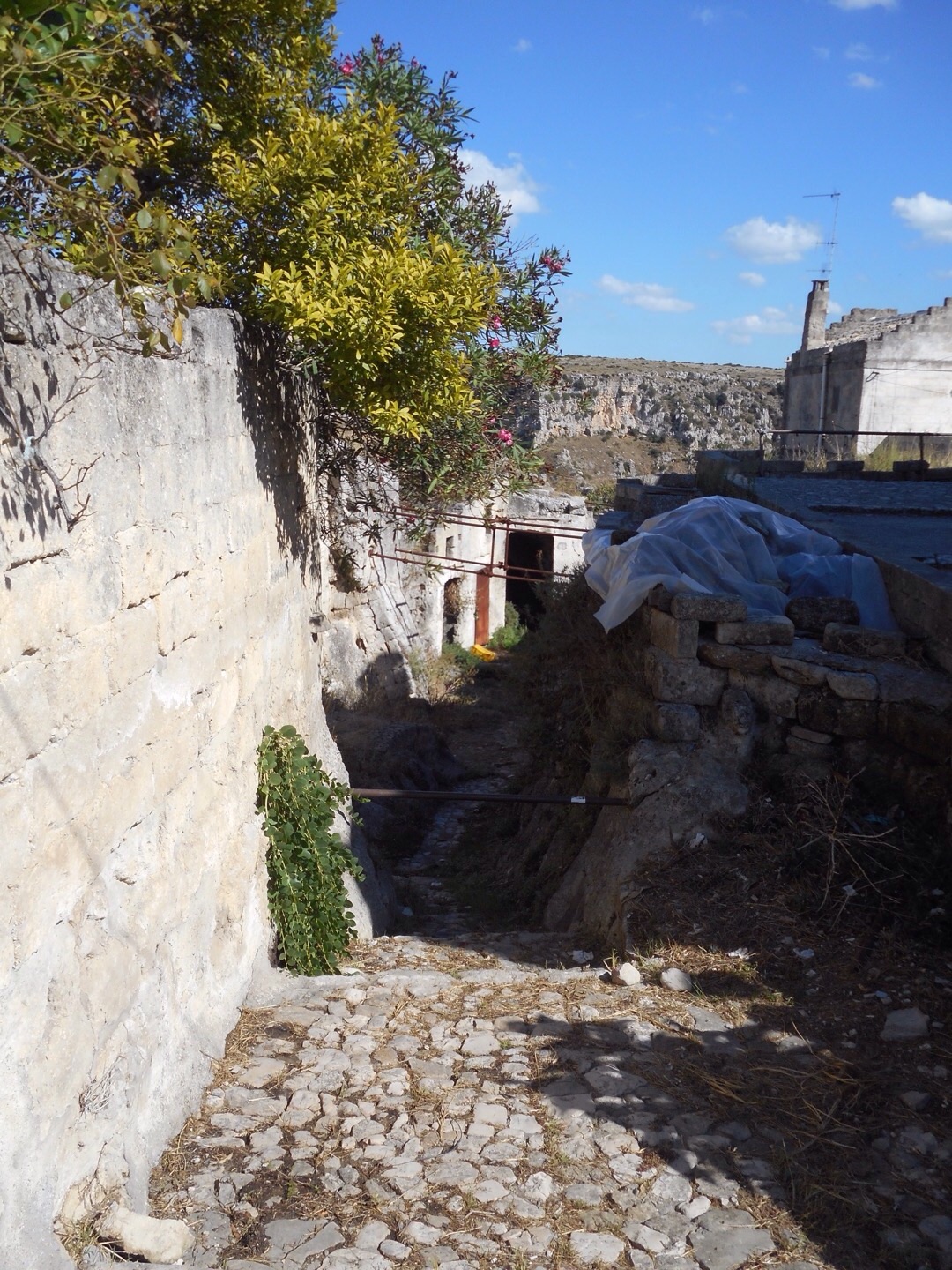
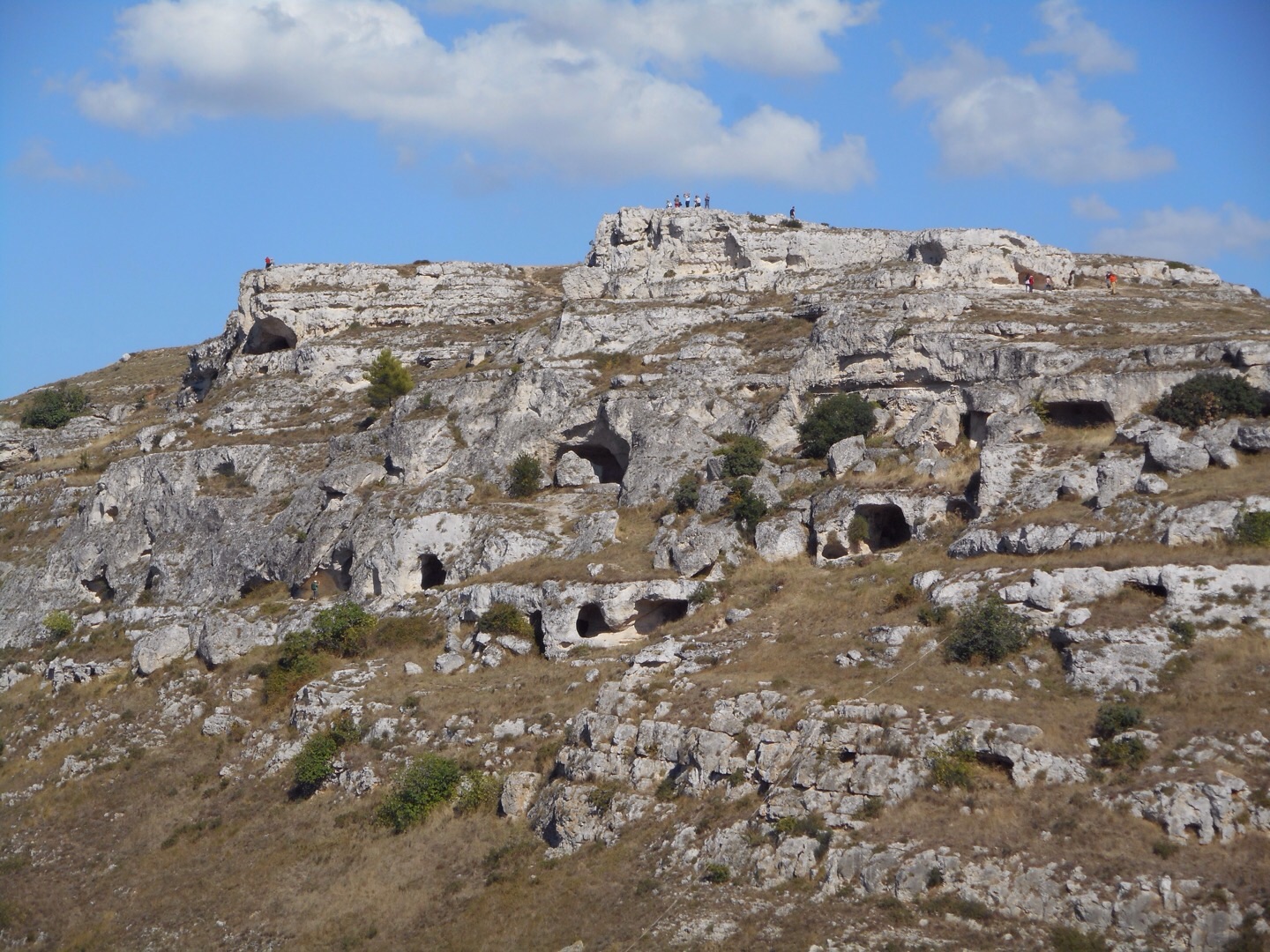
Across the valley, you can still see some of the caves, that were abandoned centuries ago.  People started living in the caves, and just never left the area.  They just kept improving their housing.

image image

What’s even better about it, is that it is still inhabited.  No thanks to the Italian Government, which tried to move out all the residents in 1952, embarassed by the poverty there, and the possibility that this was not the image they wanted of modern Italy.  Luckily, a lot of people refused to move.

image  image

The settlement started with people living in caves, which they hollowed out and improved as the centuries passed.  When they learned to work wood, they made doors;  when they learned how to built cisterns under the floor, they built cisterns which held the rainwater for the families within.  It may be the only place in the world where a person can boast of living in the same place as his forebears from 9000 years ago.

Some of the habitations look half like caves, and half like stone houses, with typical Italian red roofs, chimneys, and even TV aerials sprouting from the roofs.  No satellite dishes that I saw.  It’s clear that people make themselves comfortable with outside seating areas, modern doors and windows and build extensions onto their houses with the same stone.

image

One part of the “Sassi”, as it’s called is all residential, with a few small restaurants along the main road to cater to tourists.  Another area, still built out of the caves, contains hotels and businesses.

One of the caves, not lived in any more, has been outfitted with the household goods that were used here in the 19th and early 20th centuries.  There would have been one large bed for the couple, and a few pieces of furniture, mostly with large drawers which would be used as beds for small children.  A hen and her chicks would live under the raised bed, and there was a small stable area for a donkey or mule, and perhaps a goat.

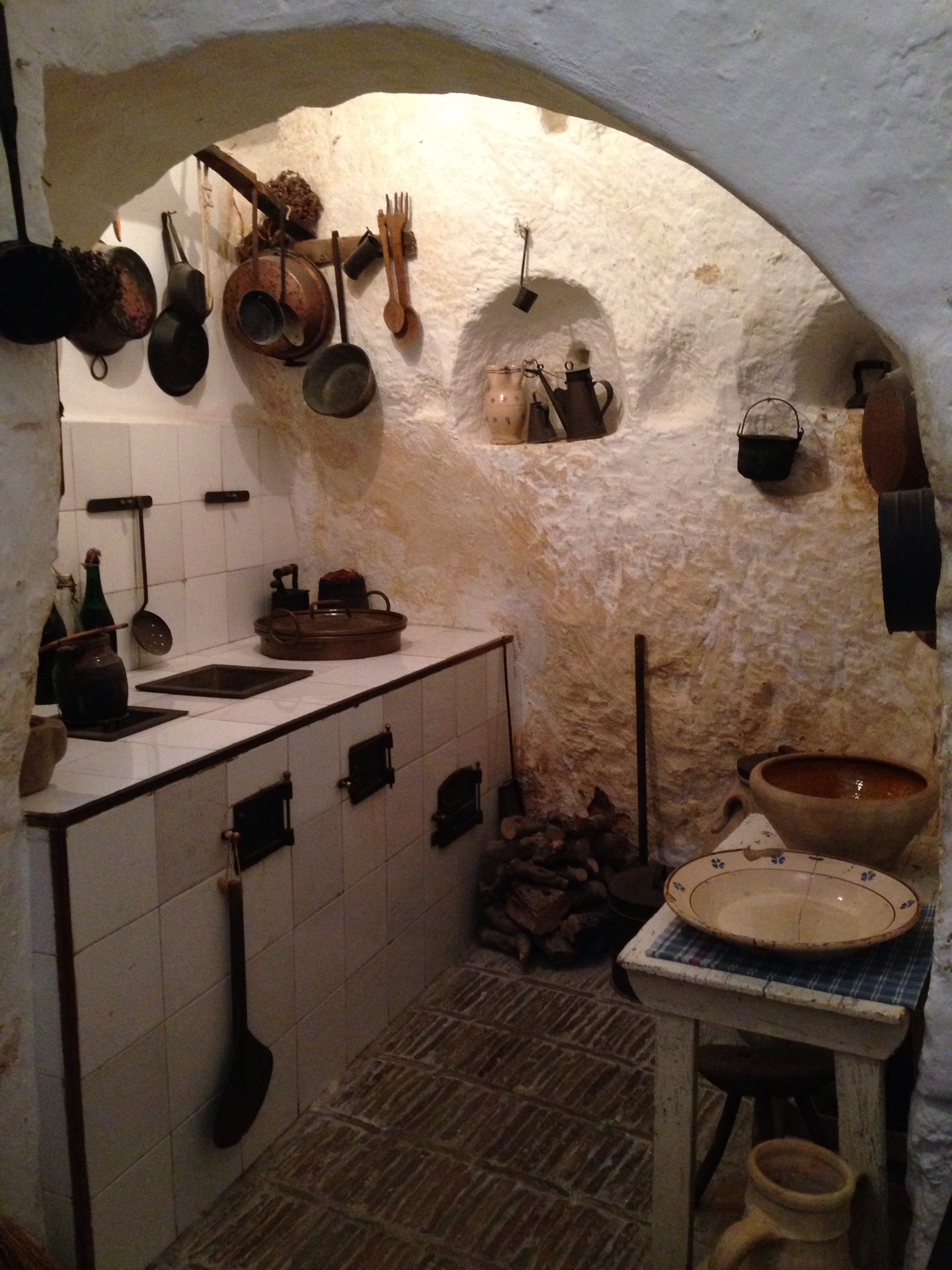
image image

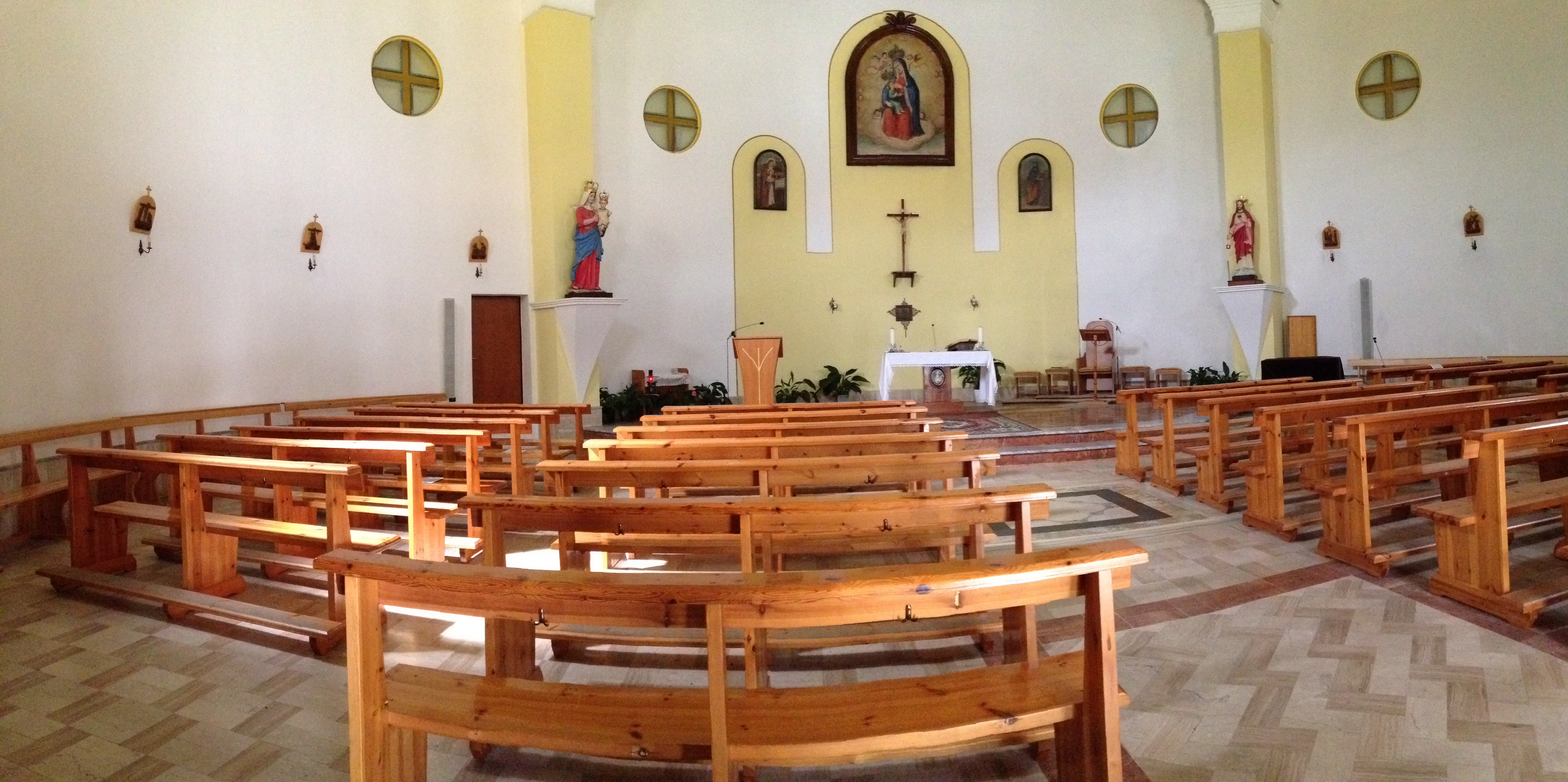
Churches are also carved out of the rock, and contain frescoes which are still quite beautiful.  In one church, I saw frescoes dating back to the 11th century.  Photography was forbidden, and there was a small entrance fee to this and some other sites, to aid with preservation.  These “Ruperian churches” can be found around the area, although we didn’t have time to discover exactly where, but I did see a sign as we left the town, advertising a church with a tour bus pulling into the driveway.

In another cave, the people had stored snow during the winter months for use in healing and relief from the heat in the summers.  Clean snow was kept for the humans and the dirtier snow for animals.

It is a fascinating site, well worth a visit, and took us so far south that on our way back we saw the Gulf of Taranto in the distance, the body of water between the toe and the heel of the boot of Italy.

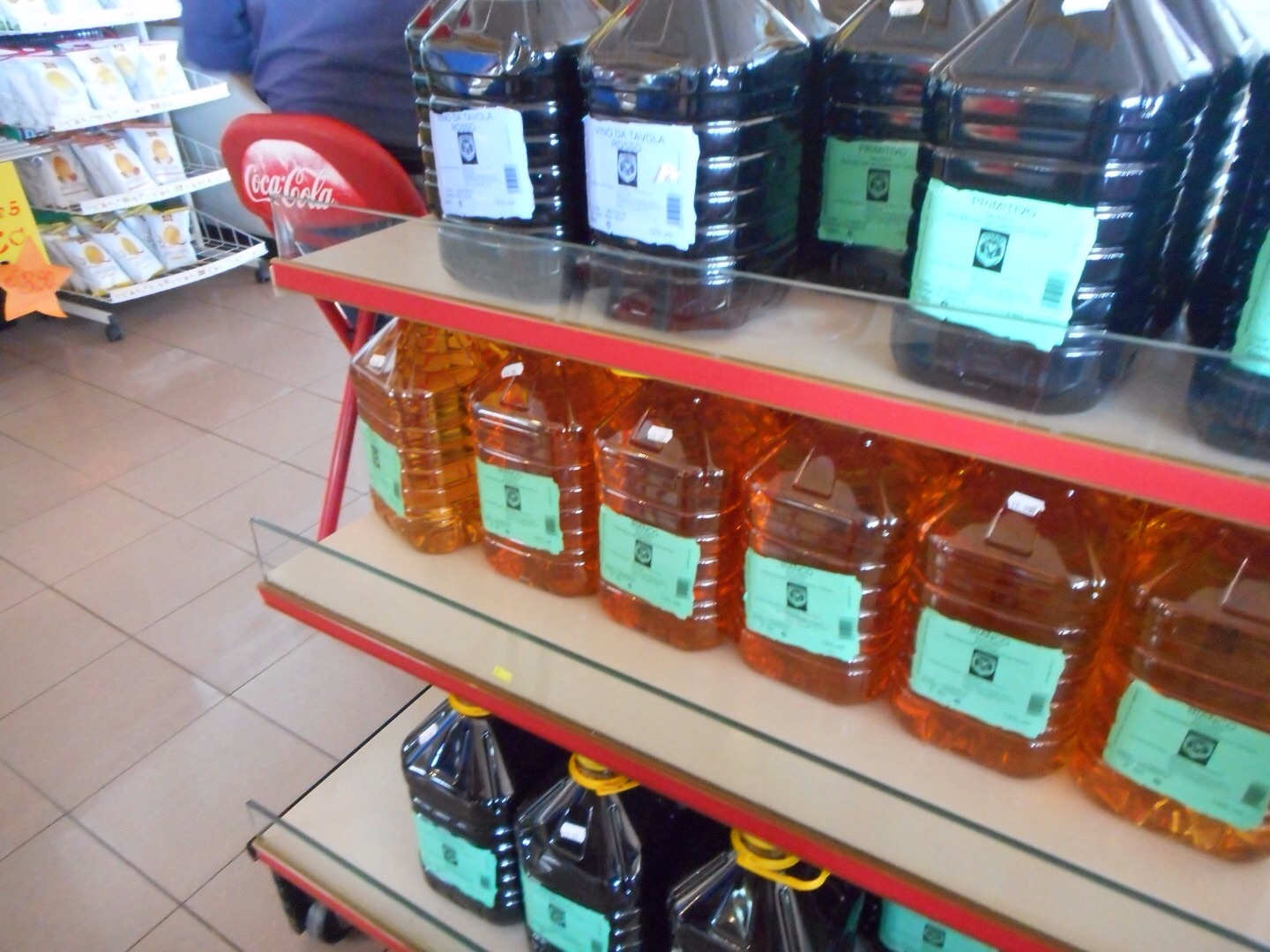
On the way home, I decided to stop for gas, and we found a gas station-coffee shop-snack bar-gambling parlor and bar – all rolled up into one.  A few men were off to the side, betting at the machines.  Two men were drinking beer, a couple of women had expresso at the bar.  We and another couple were having sandwiches.  Right beside us was a shelf selling 5 liters of wine for about $10.  I noted that one of the wines was labeled “rough”.  Obviously where the locals come.

image  image

Day 16: Grisolia and the beaches of Calabria,

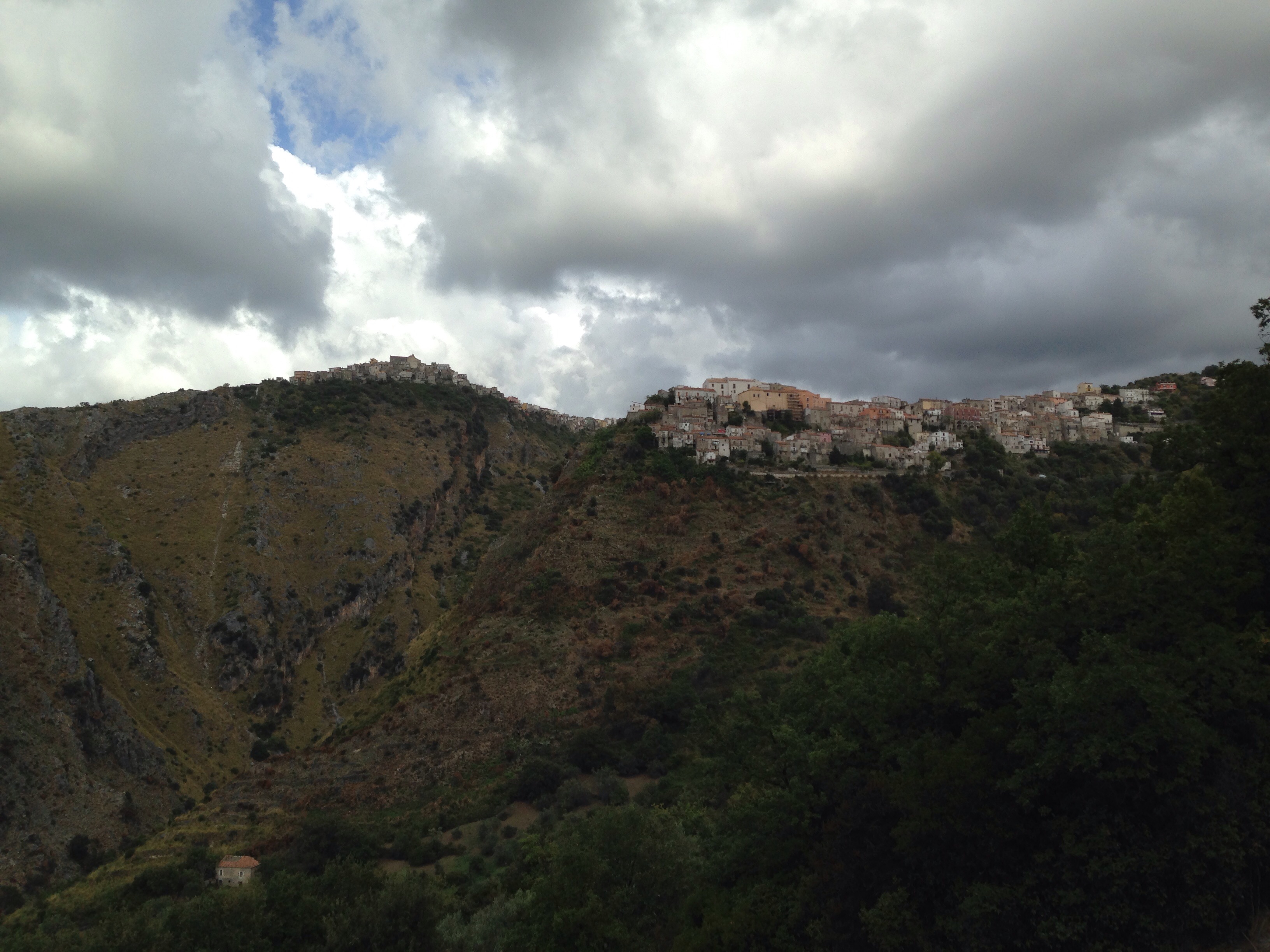
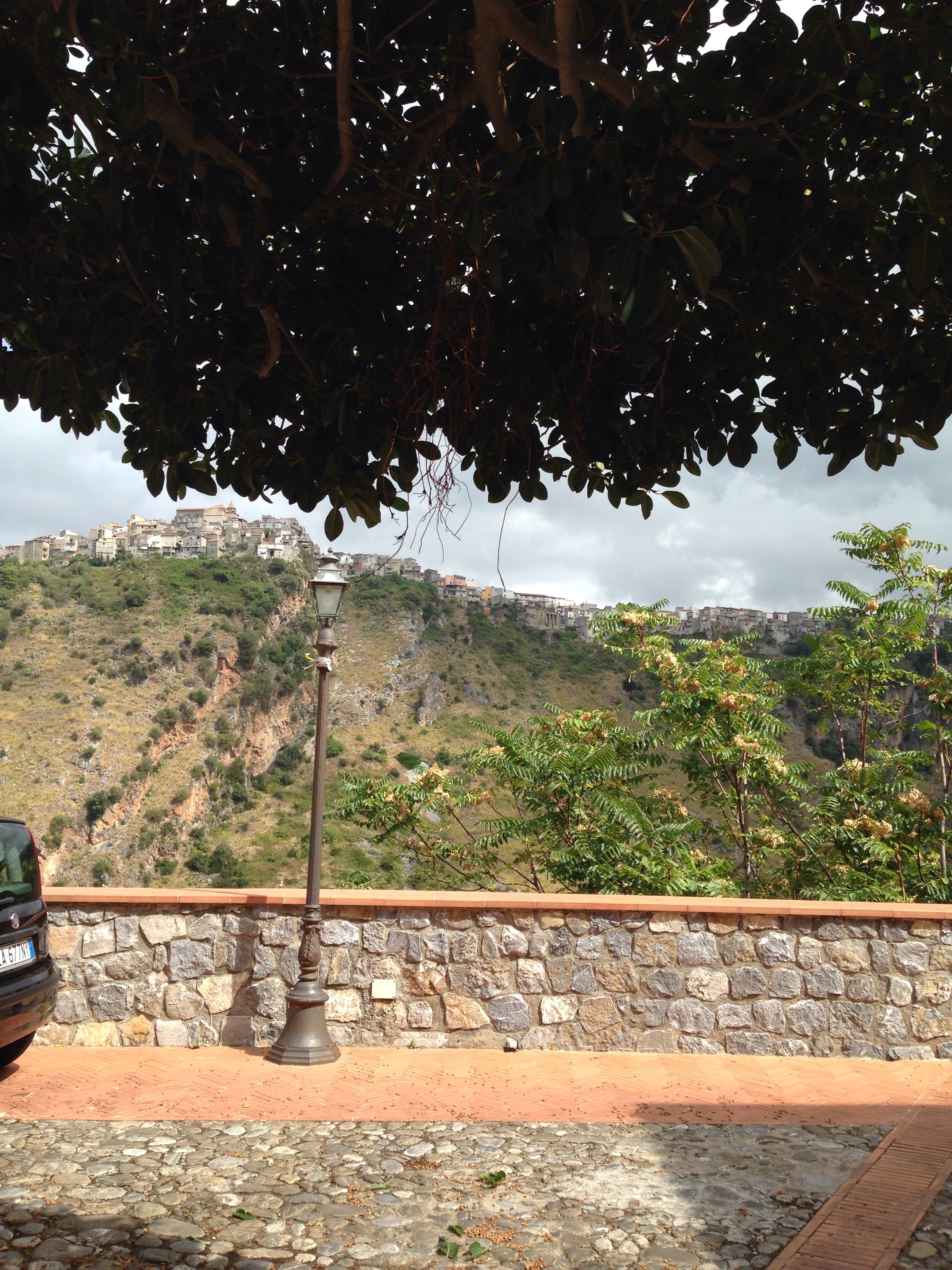
I wasn’t in the mood to drive much today, so we explored the local area. First of all we drove up to Grisolia, the hilltop town you can see from the piazza of Maiera’.  It is separated by a deep and just about impassible ravine from Maiera’, so the only thing to do was plot another course down the mountainside and up the next.

image

Grisolia is clearly much larger than Maiera’, but not nearly as nice, although probably as ancient.  We drove in, parked, walked about 50 meters past grey buildings with crumbling exteriors and weather-beaten, unpainted doors.  My enthusiasm for the project had folded, and I suggested that we just bag it.  So we did, and headed down to check out the beach.

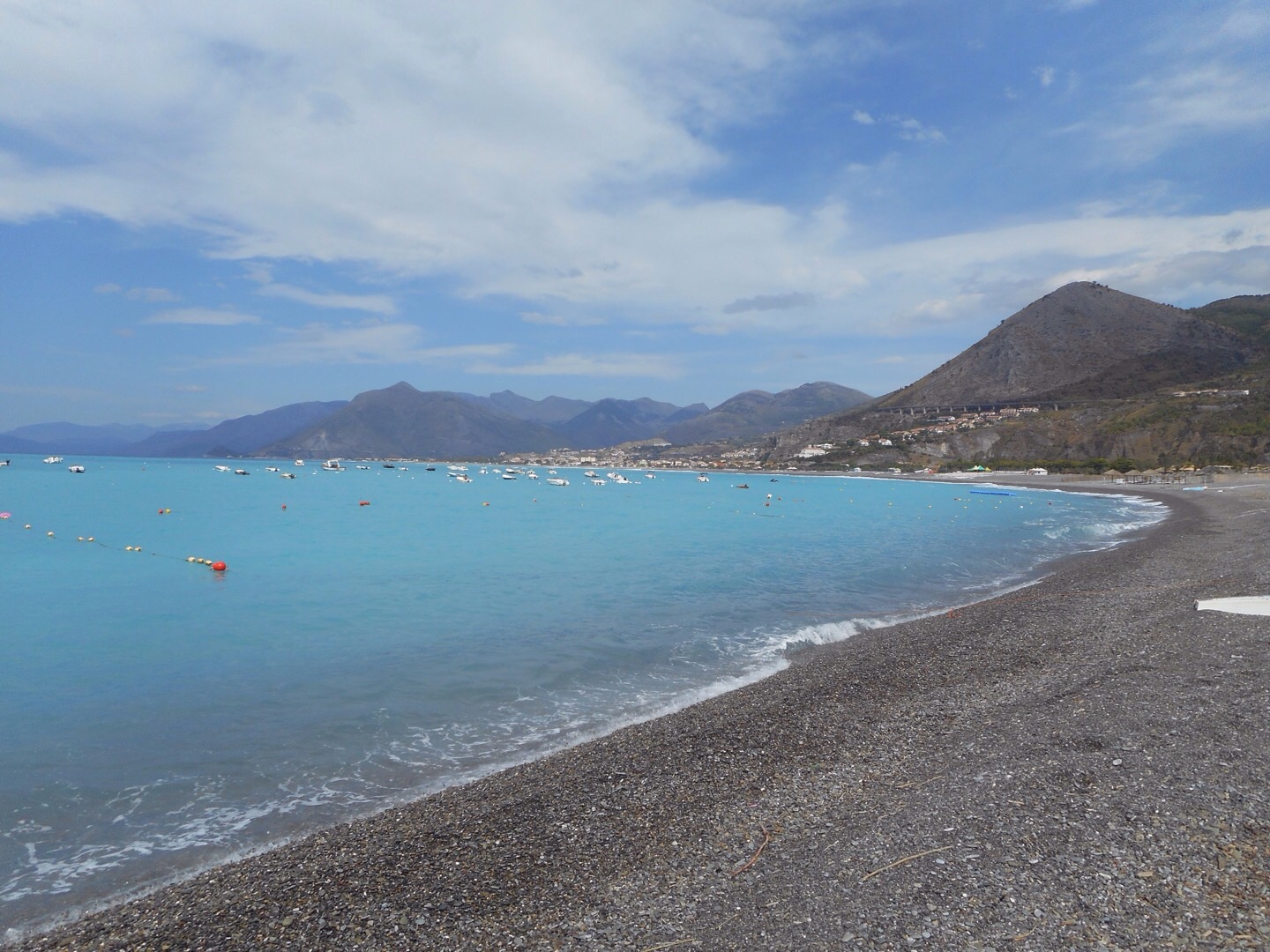
The beach looked blue, warm and inviting from our hotel.

image image

From the shore, it looked calm out to sea, but the waves pounded the shore with a thundering boom, and looked very rough.  How rough it was, I found out when I waded out into the surf up to my knees. The force of the surf all but knocked me over, although the water was not cold at all.  There was only a little sand, the rest of the beach was stones ground fine from the rocky shore by the sea.  It was hard to walk on.  Without sandals, it hurt your feet, and with sandals, the stones got caught under your feet and hurt, too.

The beach experience on these shores is very different from that in the USA.  It seemed to me to point to a very different philosophy about the ownership of natural resources in a country.  There seems to be little or no idea that the shoreline, for example, should be owned by the public.  Theoretically while this is true, it is in fact under the control of the government, which uses this resource to garner more income, rather than for the enjoyment of the public.  Sorry, public, you have to pay.

As in Castiglioncello, a lot of the shoreline was given over to beach concessions, where you have to rent your chair or lounge, and you get an umbrella.  Since it was a weekday, the concessions were deserted, but so was the beach, except for one group of women with a small boy.  We had brought our bathing suits to Italy, and were hoping for another swim, but it was clearly not a swimming beach.

Day 15: Verbicaro, Calabria

Tom’s grandparents on one side came from Italy;  his grandmother came from the small hilltop town of Verbicaro, which is why we were in this neck of the woods in the first place.  Having got a good night’s sleep, Tom got out the GPS and plotted a route back down our mountain and up the next.

image

Approaching the town, it looked very lovely, but the outskirts weren’t attractive.  Lots of blocky apartment buildings with fading paint stood around like strangers with nothing to do.  Strangers who didn’t know each other, either, because there was no cohesion to it.  We found a church in that neighborhood and looked in.  The parish offices seemed to be in a building around the back, and we went back and rang both the doorbells, to no avail.  I was mentally practicing what I could say in Italian to explain our presence on the doorstep.

Having had no luck, we descended into the older part of town, looking for the town cemetery.  We thought we might find Tom’s great-grandparents, whose names we knew.  We got as far as a small piazza, but then could drive no further.  We asked directions, and found out I had the wrong pronounciation for “cemetery”, but finally got directions, and found the place outside town, down a badly-maintained slip road.

image

There was no sign with a phone number to call for information, so we went in and browsed, “Hi, anyone home?”  A small older center of the place held a grassy area with older, simple iron crosses.  Some had names, but they were either rusted away completely or so hard to read, it was hardly worthwhile.

image

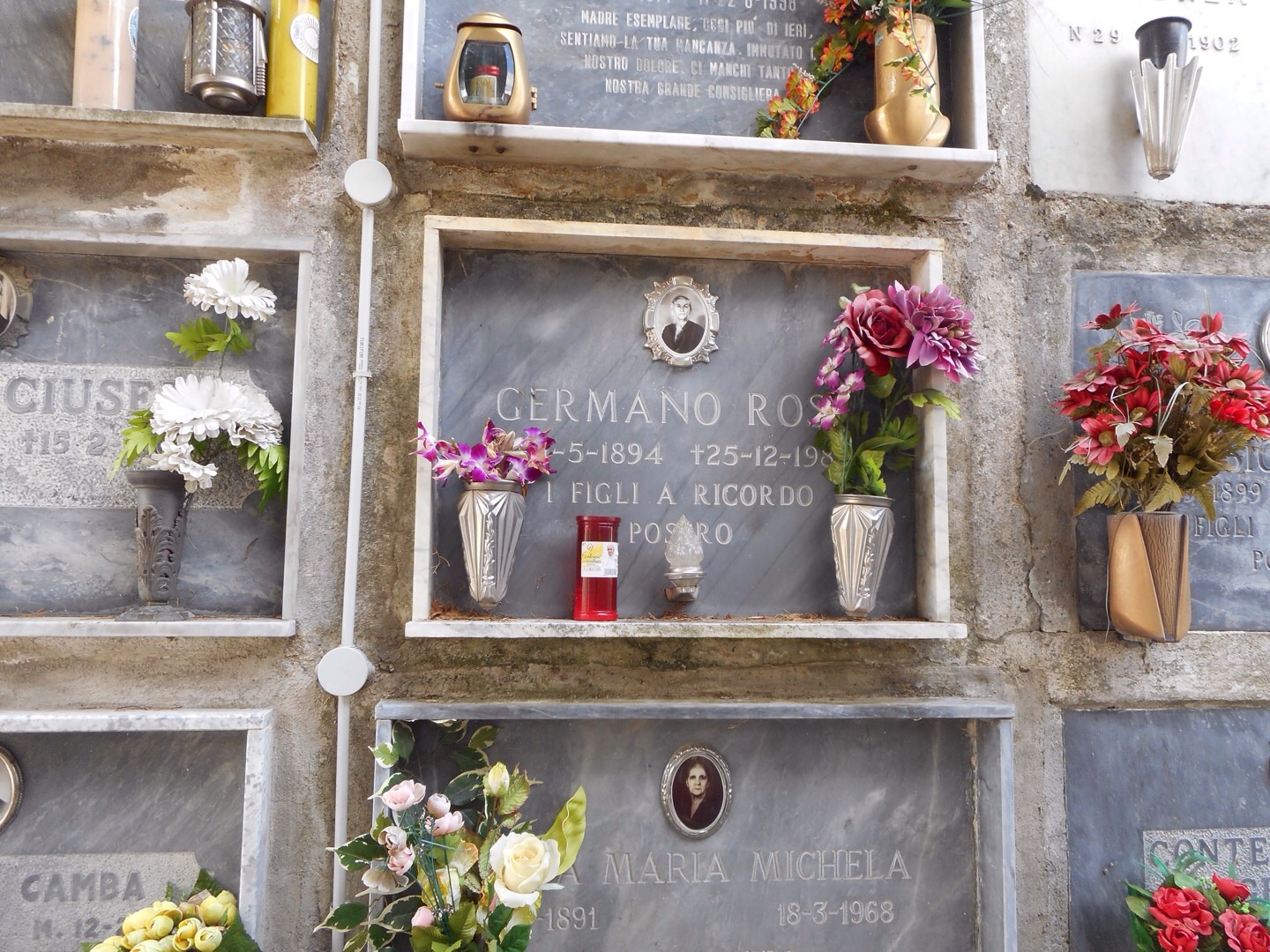
All around, like the more affluent neighbors of the suburbs, stood family mauloleums, some very eleborate with standing areas inside and glass doors;  some with marble slabs announcing the name of the deceased within.  In some cases the tombs were so tightly packed together that you had to kind of slide sideways and crouch down to read the names.  We came across some familiar family names, but no hits.

image

I had picked up a Sunday bulletin in the church and once we got back to the hotel, I called the number.  Unfortunately, I got a recorded message which was so fast, I couldn’t understand a word.  I got hold of the number of the Diocese, and tried to call there, hoping there would be cemetery records which might help.  No answer at all.

Feeling a little let down by the whole thing, we decided to let it go until we could pursue family research from home.

We were beginning to be a little disappointed by the appearance of Italian houses and villages.  Maiera’ was apparently an exception, being well-kept and even decorated, with a sense of identity.  We noticed that houses we passed seemed to have no attention paid to their outside areas;  curbs were crumbling, weeds grew everywhere, paint was fading, peeling or non-existant.  There was a sameness to the styles that reminded us of the shapes of ancient Roman houses;  maybe all the decor and sense of comfort is inside?  The outsides were very uninviting, in any case.  It was late afternoon by this time, and we decided to call it a day.

Day 14: Calabria

We got to the hotel last night after a spine-tingling drive up hairpin curves after dark.  We were greeted at the hotel by oil lamps set on the ancient stone steps, like medieval travelers arriving at a hostelry.

The village is called Matiera’, founded by the Greeks at the time when southern Italy was a Greek colony.

Our room is a marvel of modernity, high ceilings, but not a lot of floor space.  The space problem has been solved by creating a very modern sleeping loft with a king-sized bed.  The bathroom is attractive and comfortable, and there’s the original balcony, its stone floor set securely into the wall with a stunning view of the plain below and the sea.

image

We hadn’t had dinner, and were starving, but I wasn’t up to driving around looking for food.  We were asked what we would like, and asked for bread, cheese and some meat.  There arrived a plate with a selection of cheeses, prociutto, bread and a plate of fresh fruit.

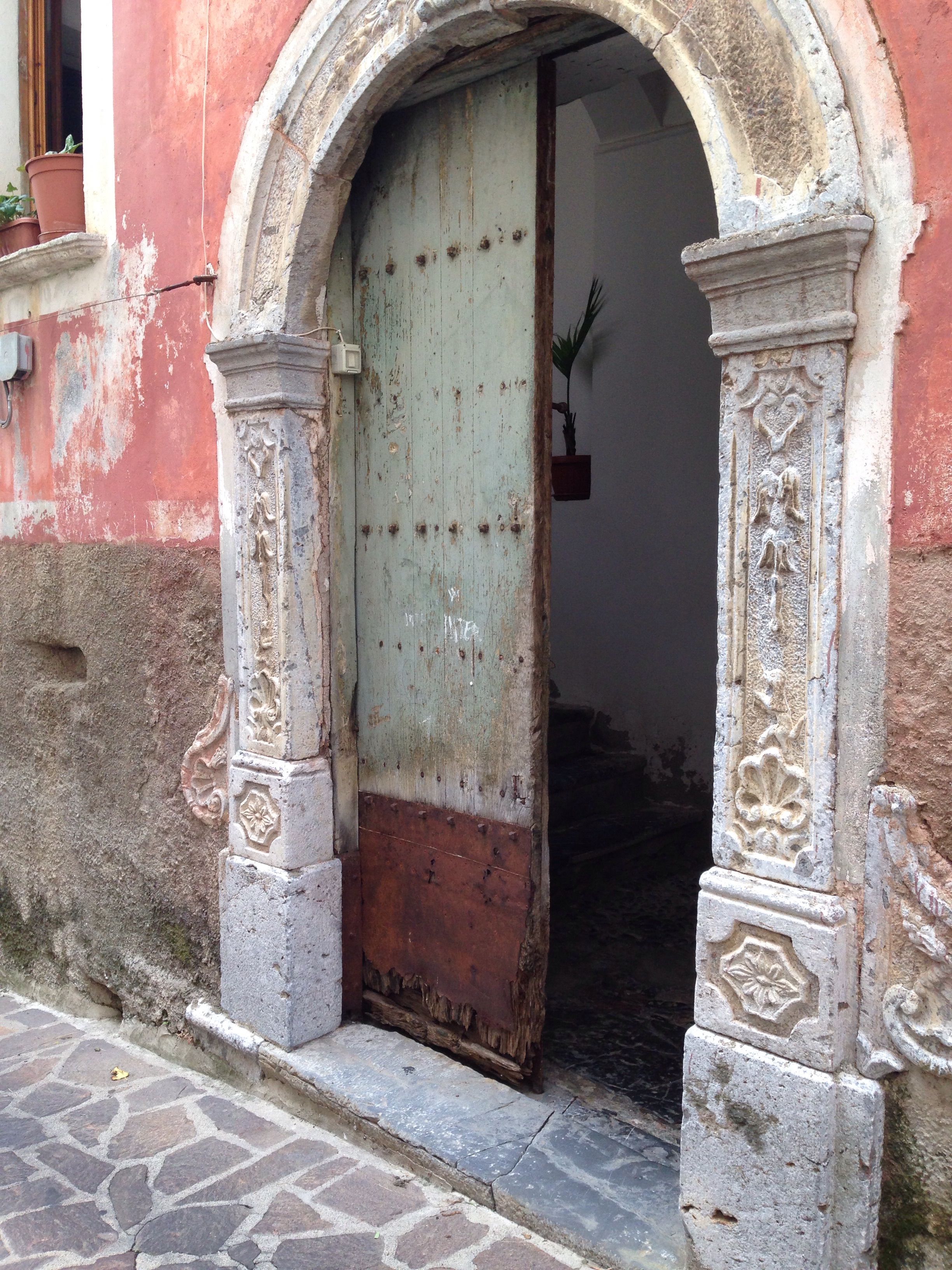
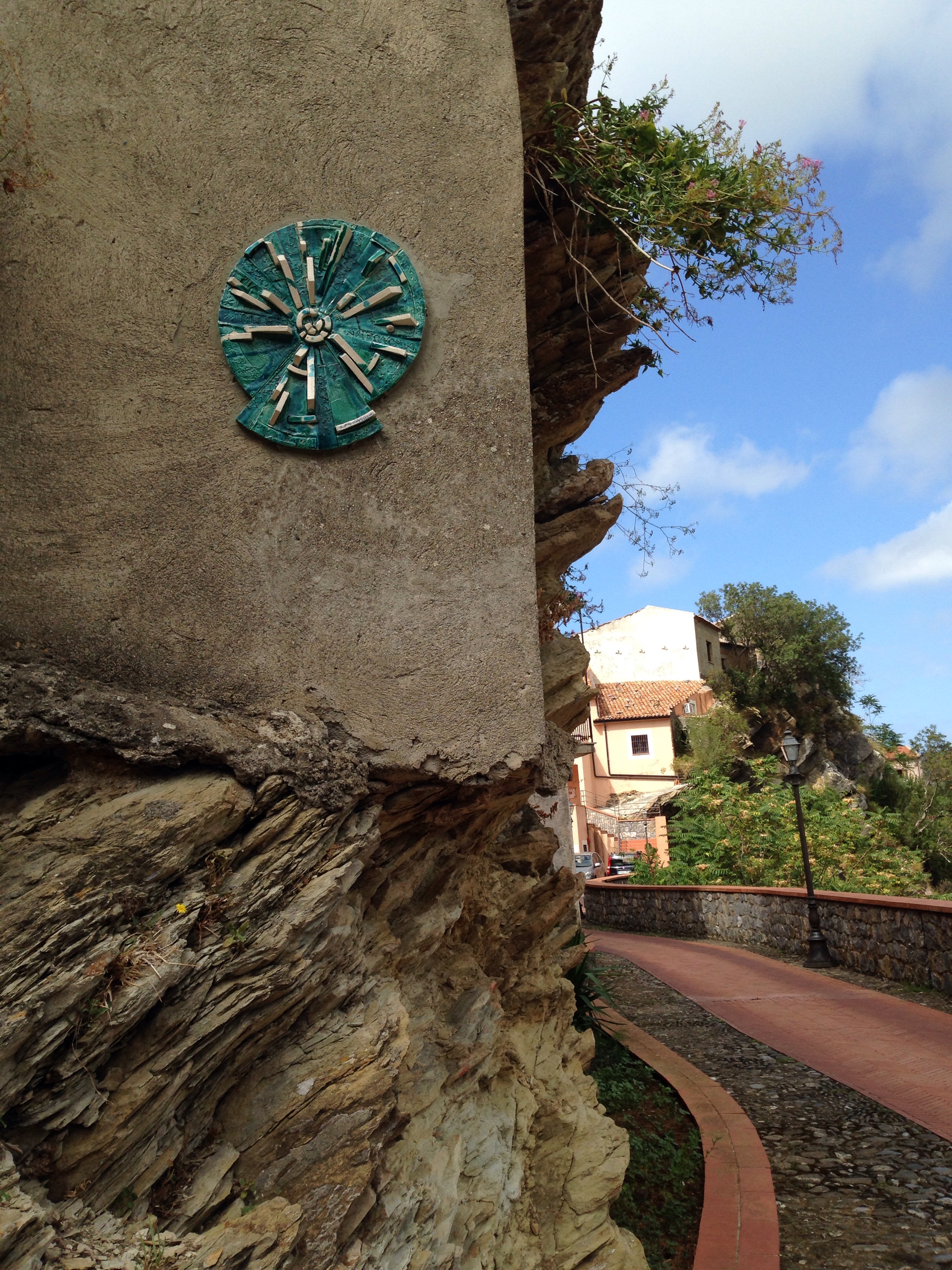
In the morning, we explored this ancient town, which has the flair of an artists’ colony.  The main road (a few residents with small cars drive it), and the pedestrian streets are all paved attractively with stone and tile.  Ceramics are imbedded along the walls of houses, which are well-kept.

image image image

From the tiny piazza at one end of the town, where I sweated out my ten-point car turn of the night before, you can see the next hilltop town of Grisolia, separated from our mountain by a scary ravine.  At another side of the town, we discovered another view of the sea from someone’s patio.

image  image

Day 13: Arrivaderci, Napoli! On to Amalfi and Calabria

I promise I’ll catch up, but for now…

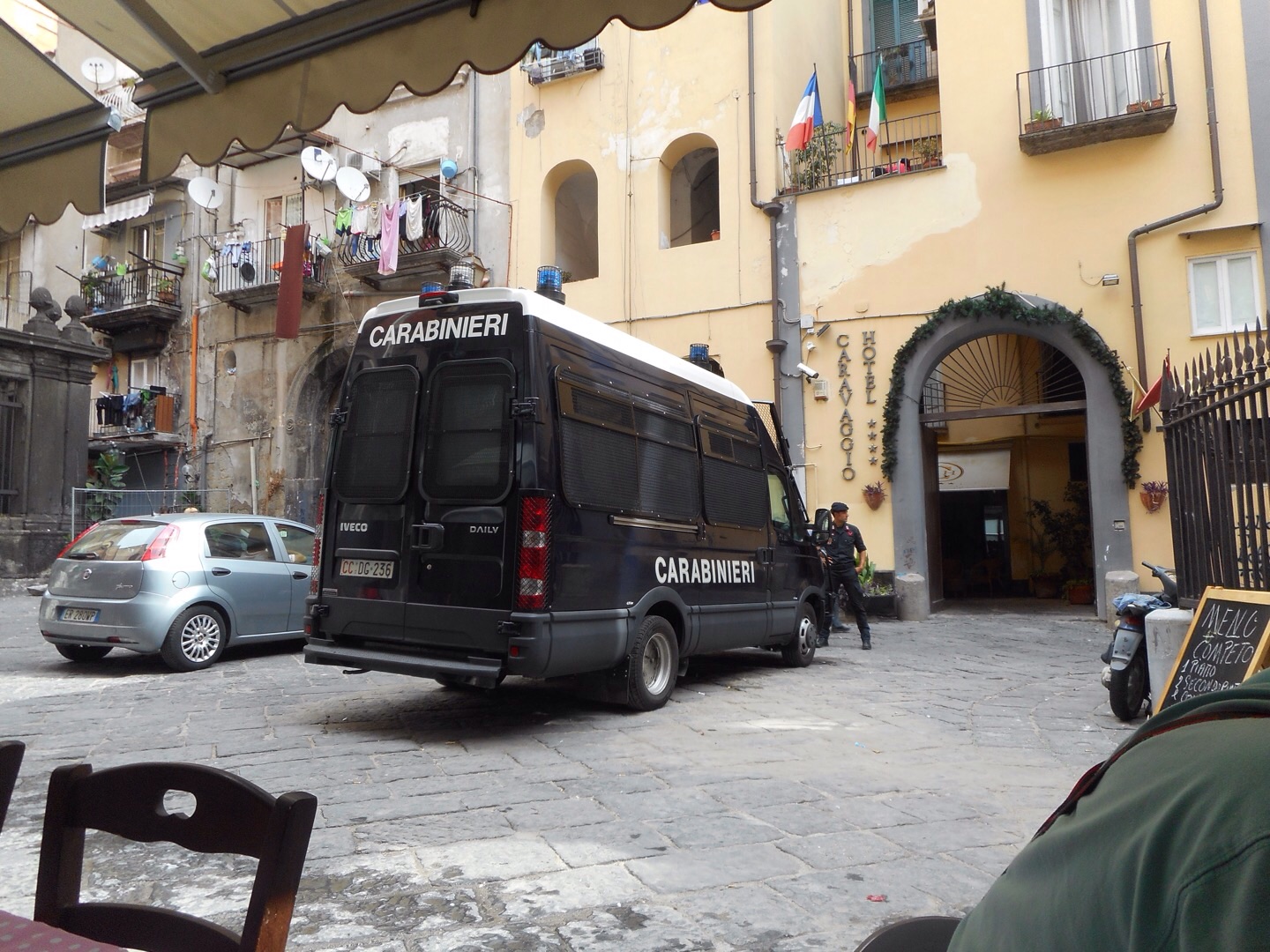
We left Naples by car, having rented one from Maggiore, an Italian rental-car company with an office conveniently at the Naples Garibaldi train station.  Thank God for GPS, which got us out of the city on the Feast Day of San Gennaro.  Already our Piazza was swarming with cababinieri, one of whom took pity on me when my phone wouldn’t work to call a cab, and who called them with his own cell phone.

image

The A3 autostrada is the main route south, before you take a right onto the Amalfi Coast, and it was a pleasant surprise.  Well-maintained, with frequent pull-in areas for emergencies, it felt safe and fast.  We sped off onto the exit for Amalfi, and came to a quick halt, because apparently the rest of the world was heading there, too.

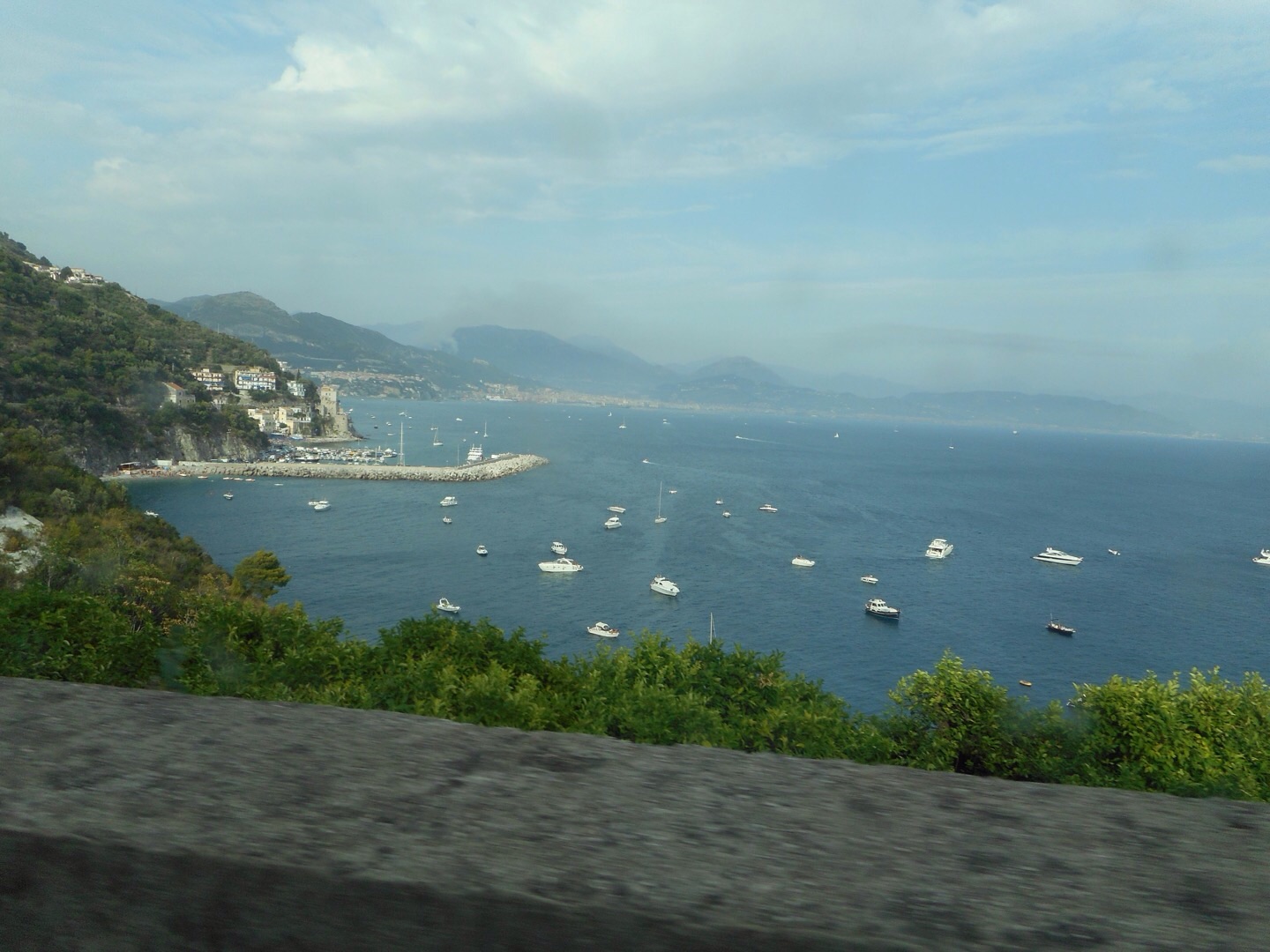
When we actually got onto the road, it wasn’t bad at all.  The coast is stunning;  sheer cliffs falling right into blue sea, postcard-like villages hugging the hills above the water, and always the ever-changing perspective as you round narrow turns.

Luckily, almost everyone is taking their time, except the many motorcycles, but I learned to keep an eye out for them, and just keep driving predictably, so that they could weave past me safely.

image  image

I was a little confused by the fact that the sea was on my left (didn’t I want to head east???), but Tom was navigating, so I pushed the thought aside.  We were hoping to stop for lunch in Amalfi, but it was so jammed with tourists, that we just drove through.  A few miles further, Tom came to the conclusion that we were headed the wrong way (how did that happen?), and I found a place to reverse, and turned back.

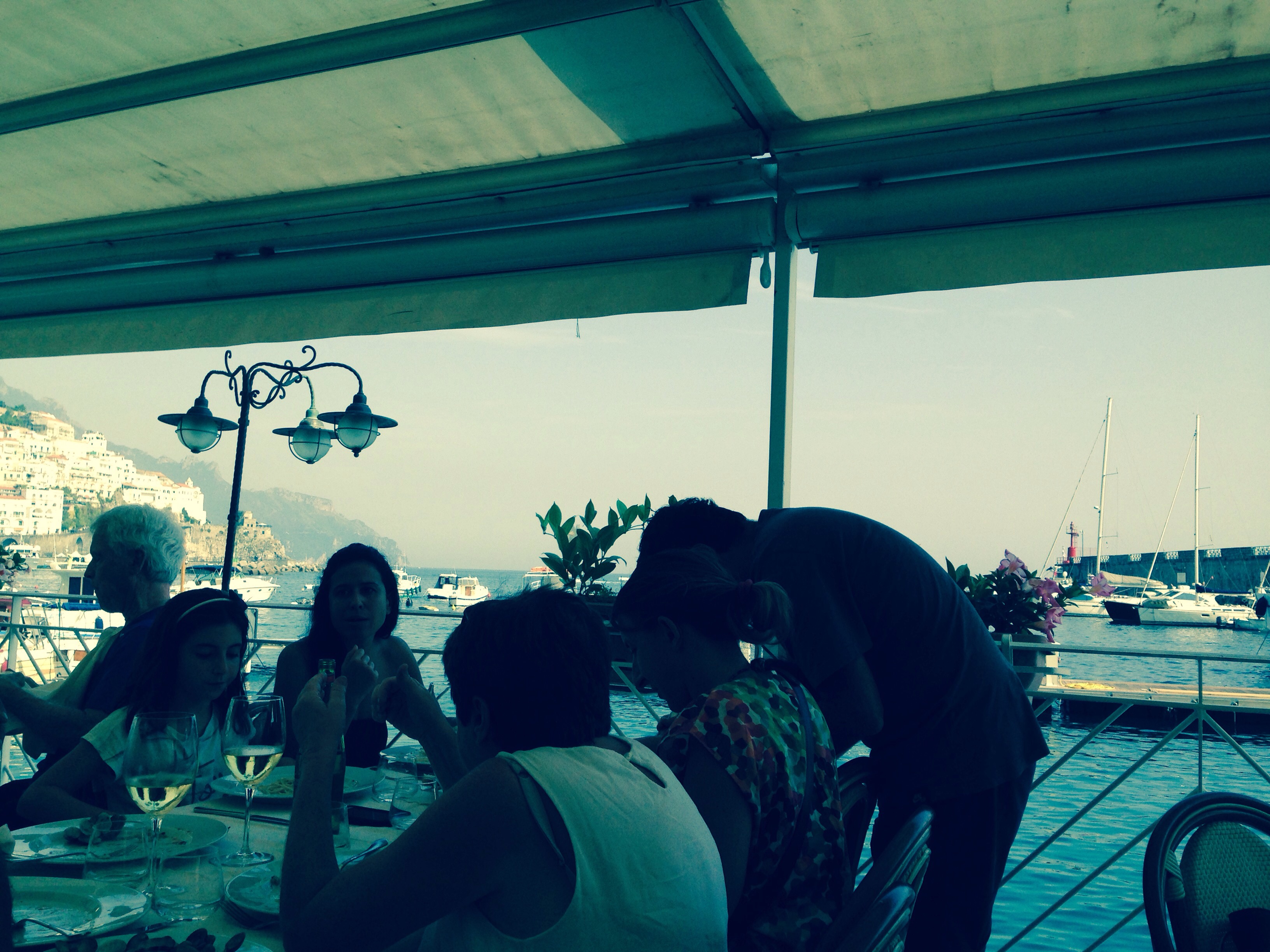
This time when we got to Amalfi, I wanted to stop.  My opportunities to see anything had to coincide with the twists in the road, and it was frustrating not to be able to stop and gawk, so we found a place to park and went into a nice restaurant down on the water.  Unfortunately, when we came out, we discovered that our nice, convenient parking stop was in a no-parking zone.  The owner of the pay-parking across the street had called the police in a huff, then lied (in Italian, figuring I wouldn’t understand) to another unfortunate couple that Tom had cursed at him, refused to move, and made a rude hand gesture.  There had, in fact, been no interaction between us at all.

Watch where you park.

Eventually someone showed up to let us ransom our car, for 140 euro, and we headed in the correct direction.

image  At least lunch was good!

I got back onto the autostrada, and drove south into more and more mountainous terrain.  The engineers building the road had opted to build tunnel after tunnel, keeping the road nice and straight, and it was a little like diving into hobbit-holes, as you drove into round openings in grassy hills, one after the other.

We had made a hotel reservation in the small town of Maiera’, a hill town near the sea in the province of Cosenza, Calabria, and were trying to get there before dark.  As we came further south, the hills of Naples gave way to serious mountains, reminding me of the Rockies in their harsh outlines, though not nearly as high.  The valleys and ravines between mountains are dramatic, and bridges link one mountain to the next, so that you look down at precipices as you pass.   The road became twisty, mist was coming up between the hills, and it was getting darker.  To our right lay a darkening sea.

GPS on my phone was useless, T-Mobile’s promise of data having evaporated somehow, so we were relying on Tom’s dedicated GPS.  By the time we got to the final turnoff, it was full dark.  The road was very, very twisty,  climbing sharply, and since it was dark, my headlights only illuminated a few meters of road at a time.  We seemed to climb for a long time, then found ourselves in a tiny village, following the sign for the Hotel Palazzo Bruni, which sounded a bit Buckingham Palace-like.

In the town there was a small parking lot with 5 or 6 cars already filling it, then an open gate that led beyond into the narrow heart of a very ancient village.  “Go on”, urged Tom. “I don’t think I’m supposed to drive there,” I said.  “Go on a little, at least,” said Tom, who wanted to lug suitcases as little as possible, and I did.  In my defense, I was tired.  I got about 40 feet down the “street” (which was paved with flagstones – another clue), and realized that I was all but stuck and would have to reverse back, uphill and around a curve.  Tom suggested we leave the car for the moment, find the hotel, and ask them what to do.

image

At this point, a bare-chested villager appeared, waved to me, and told me in fast Italian that I couldn’t park there.  I stumbled around in Italian, told him I was stuck, nervous about backing up, and didn’t know what to do.  At this moment, a woman appeared carrying a bag of shopping, and protested loudly that I couldn’t park there.  The man explained the problem, and she suddenly laughed, waved and disappeared.  Two old people popped out at the side of the street, and watched my confusion silently.  Suddenly, a young man appeared from the street in front, said he was from the hotel, and if I was very, very careful, there was a small piazza ahead where I could turn around.  He directed me from in front, and with my side mirrors folded in, I crawled down the street, sometimes with as little as an inch or two on either side.

The village is literally cut into the rock, and in one area, rock jutted out into the street and was tricky to get around.  The Amalfi Coast drive was a piece of cake, I decided.  We’ve been shown to a surprisingly modern room with a small balcony, which I’m guessing will give us a fabulous view in the morning.  We’ll see.  No one here seems to speak a word of English, so it will be fun to see how useable my rudimentary Italian is.